
Your first guided birdwatching walk: how to prepare
A birdwatching walk combines time outdoors with shared discovery. Choose a suitable session and prepare before buying new equipment.
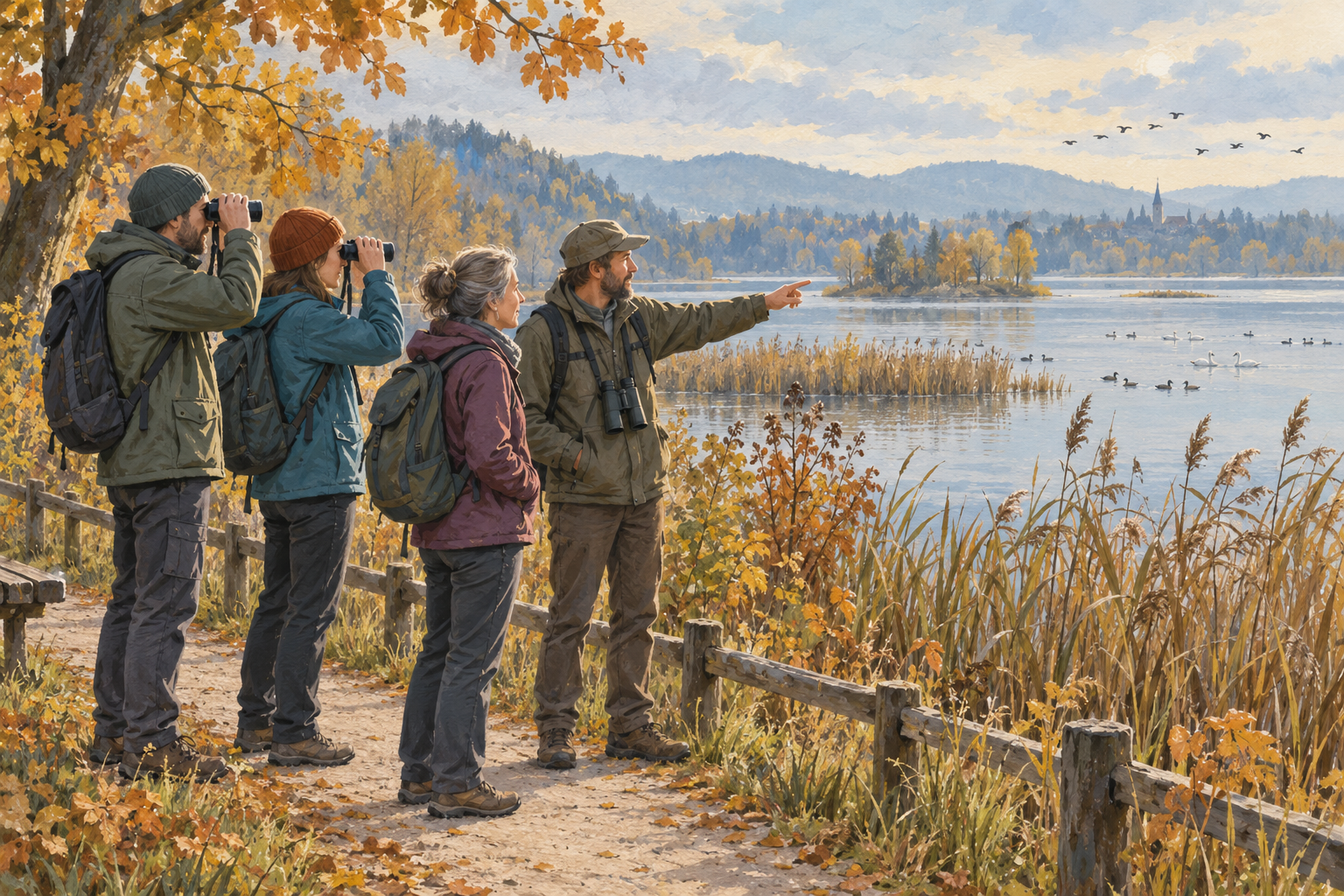
Would you like to spend time outdoors and observe birds with an experienced guide? For a first outing, the right event matters more than a long list of species. This guide helps you choose a guided birdwatching activity in Germany, from its entry level and actual route to equipment and taking part in a group.
1. Beginner walk, bird song session or specialist excursion?
Start by checking what you will actually do at the event. A general introduction may suit getting to know different birds; a bird song walk has a different focus from observing beside a lake. For a specialist activity, ask whether the guide also explains the basics. The title alone does not establish how much prior knowledge is expected.
The LBV Starnberg Birdwatching series is a specific example of an activity described as suitable without previous knowledge. That statement applies to this series, rather than every ornithological excursion. Look for equally clear information about the intended participants in your chosen event, or ask before signing up.
2. Consider walking distance and observation time separately
A two-hour activity could involve plenty of walking or mostly standing still. Ask about the distance, surface, slopes and longer stops. Include the return route: does the walk finish where it started, or near a different public transport stop? These details are more useful than an undefined description such as “easy walk”.
If you need places to sit or a step-free route, explain your specific requirements. Check access to any observation platform as well. For children, look for the recommended age and accompanying adult requirements; a specialist walk for adults may not suit a first family outing. Compare two suitable options instead of relying on an unclear route description.
3. Check binocular arrangements before considering a purchase
Ask whether you need your own binoculars, can borrow a pair, or will share equipment. For “Treffpunkt Turm” at Altmühlsee, the LBV describes guided observation using binoculars and spotting scopes. This example page does not replace confirmation of the arrangements for your intended date.
If you already own binoculars, try them before leaving home: can you locate a distant object, focus and hold them comfortably? For a first guided session, it makes sense to understand the event arrangements before buying anything. A spotting scope on a tripod may work differently; ask someone to explain how to use it at the session.
4. Prepare for standing still and changing weather
The LBV’s general observation advice recommends clothing suited to the weather, worn in layers. Remember the time spent without moving when packing. An editorial planning suggestion is to set out your shoes, an extra layer, suitable rain protection and a drink the evening before, adapting your choices to the forecast and route.
Check the organiser’s latest notices before travelling. Find out how a weather cancellation would be communicated and whether there is a contact for the event day. This is particularly useful if you have a long journey. A general description does not establish the weather conditions in which a particular group will actually set out.
5. Record registration, the meeting point and your return journey
Free admission does not necessarily mean you can arrive without registering: the LBV’s “Treffpunkt Turm” page explicitly requires registration. For your event, check your participation confirmation, any charges and the exact meeting point. Distinguish an organisation’s office address from the place where the group actually starts.
Keep the date, starting time, expected finish, directions and contact together. Allow a little time on arrival and plan the return connection. A simple editorial example: if your bus leaves exactly when the activity is due to finish, there is no time to reach the stop. Include a later service in your plan instead.
6. Observe with the group while giving birds space
NABU Selfkant’s recommendations include staying on paths, respecting local notices, avoiding noise and leaving feeding birds undisturbed. Follow the excursion leader’s guidance rather than moving closer to animals on your own for a better view. A distant bird can still be interesting through binoculars.
Ask for a brief orientation if you cannot find the bird: which part of the tree canopy, or which distinctive landmark, should you look beside? You do not have to guess a species name to take part in a beginner group. Give others a turn with shared equipment and ask questions when the guide has an opportunity to answer.
7. Bring home a small observation rather than a species target
After the outing, note one or two things you would like to recognise again: perhaps a shape the guide described, a behaviour or a habitat. The LBV includes simple observation notes among ways to document what you see. A short sentence of your own is enough for a personal starting point; leave uncertain identifications open.
For another nature outing, use the eVants event catalogue to look for guided activities nearby. Then open the original source and check the specific date. The LBV activities mentioned here are researched examples of formats; this guide makes no claim about available places or their current inclusion on eVants.
Sources and illustration
Sources checked on 16 October 2026. Advice on choosing and planning is editorial; specific organiser statements are attributed. The hero image is an AI-generated illustration of a fictional group beside a fictional lake, rather than a photograph of an actual excursion.