
Your first basket weaving class: make a willow basket
A basket involves more than a neat rim: choose a suitable introduction to willow weaving.
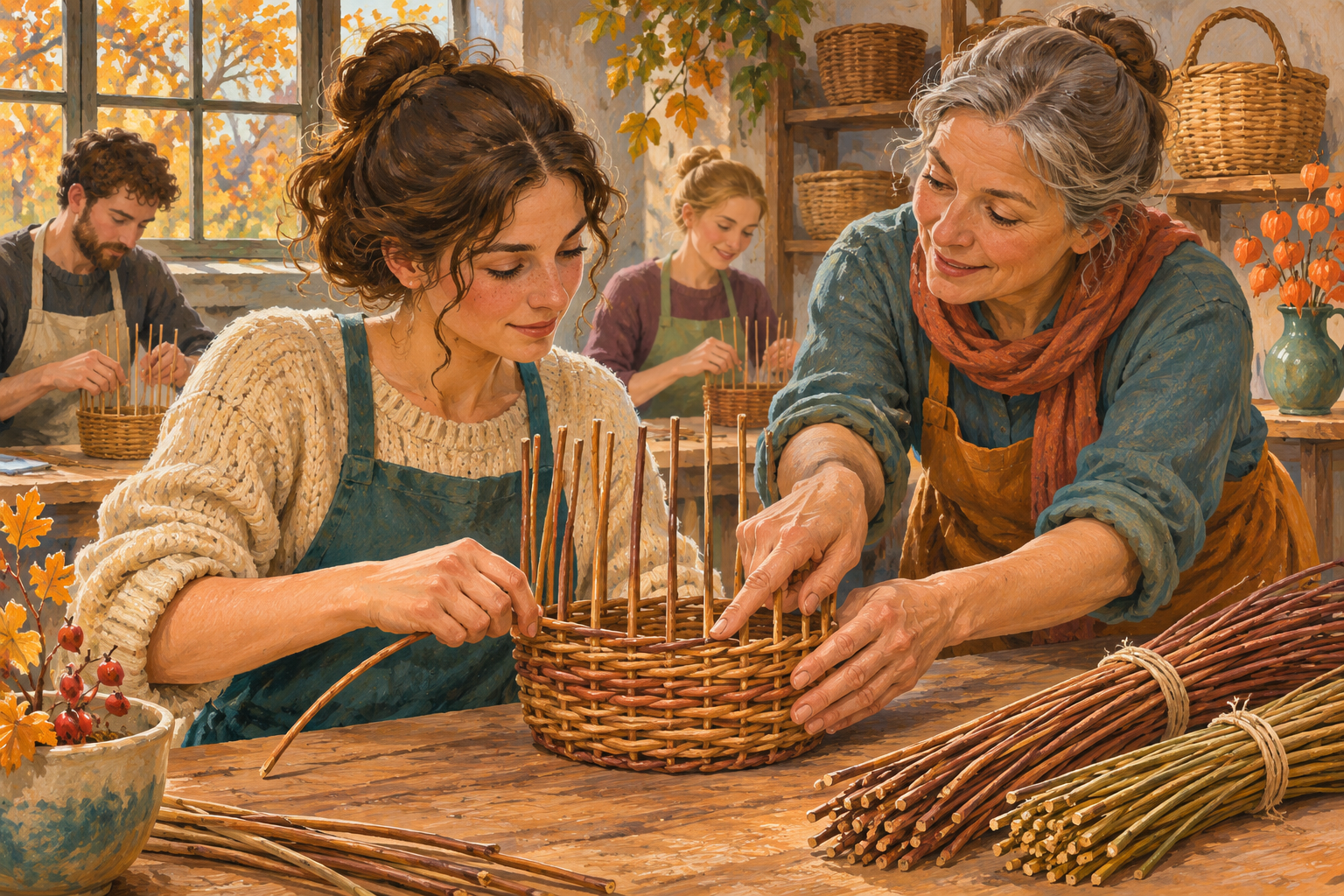
Would you like to weave a willow basket at a class in Germany? Choose your project before choosing a date. A round practical basket and a small decorative object involve different steps and schedules. Check whether the class explicitly offers your intended result to beginners.
1. A basket or a decorative object?
Check what the class actually produces: a complete basket, a bowl or a decorative object. An attractive photograph alone does not explain the technique or learning scope. Ask whether you make the base, sides and rim yourself or start with prepared components.
VHS Neustadt describes an introduction making a basket from unpeeled willow, from base to rim. The Korbflechterin in Hanover distinguishes a twelve-hour round basket class from shorter sphere and star formats. These illustrate different projects; the Hanover page currently offers no dates.
2. Allow for the complete schedule
Read every meeting date and the daily start and finish times. A weekend class only works if you can attend both days. Ask how breaks fit in and whether a beginner should finish a basket within the scheduled time. Avoid arranging a tight connection immediately afterwards.
Kreismuseum Syke describes a two-day seminar. Neustadt lists a single full-day introduction. Both researched dates are already past and serve as format examples here. They do not establish current booking availability.
3. Confirm willow and tools in advance
Ask which materials are used and who prepares them for the class. Do not collect or buy your own rods before the instructor confirms suitability. Check whether enough material for the intended basket is provided and whether special requests need advance discussion.
Neustadt supplies weaving material and tools. Syke provides materials but also lists tools to bring. Request a specific packing list and ask about borrowing before buying secateurs, a knife or other equipment. Follow the instructor’s directions when using tools.
4. Compare tuition and material costs together
Write down the total for tuition, materials and any extras. Neustadt includes materials; Syke lists a separate material charge. Do not assume either arrangement applies elsewhere. Ask whether a larger basket or different project changes the cost.
For a group booking, establish whether each participant makes a basket, how much guidance is available and what prerequisites apply. Agreeing on a preferred date does not confirm places. Save the booking confirmation, material list and cancellation terms.
5. Prepare for the workspace and journey home
Ask about working position, seating, access and breaks if you have particular needs. The class should fit your abilities. Describe any support you need to the instructor in advance instead of relying only on a beginner label.
Plan food and drinks according to the provider’s instructions; Neustadt asks participants to bring both. Wear practical work clothes. Ask about the finished basket’s approximate dimensions and care instructions for the material used. Allow more room on the journey home than you would for a small tool bag.
6. Your checklist before booking
Confirm the specific object, suitability without experience, steps you perform yourself, all dates, supplied materials, tools, total cost, breaks and transport. If you want a gift or shopping basket, agree its size and intended use beforehand. A limited project makes the decision easier.
Use “Discover events” to reach the eVants event catalogue for more leisure ideas. Always check course details and future dates on the original website. No current eVants listing of these examples is claimed. Sources checked: 29 November 2026. The hero image is an AI-generated illustration of a fictional weaving workshop.