
Your first sewing class: choose the right machine, materials and format
Want to try sewing? Find a class that fits your experience, equipment and calendar before buying supplies.
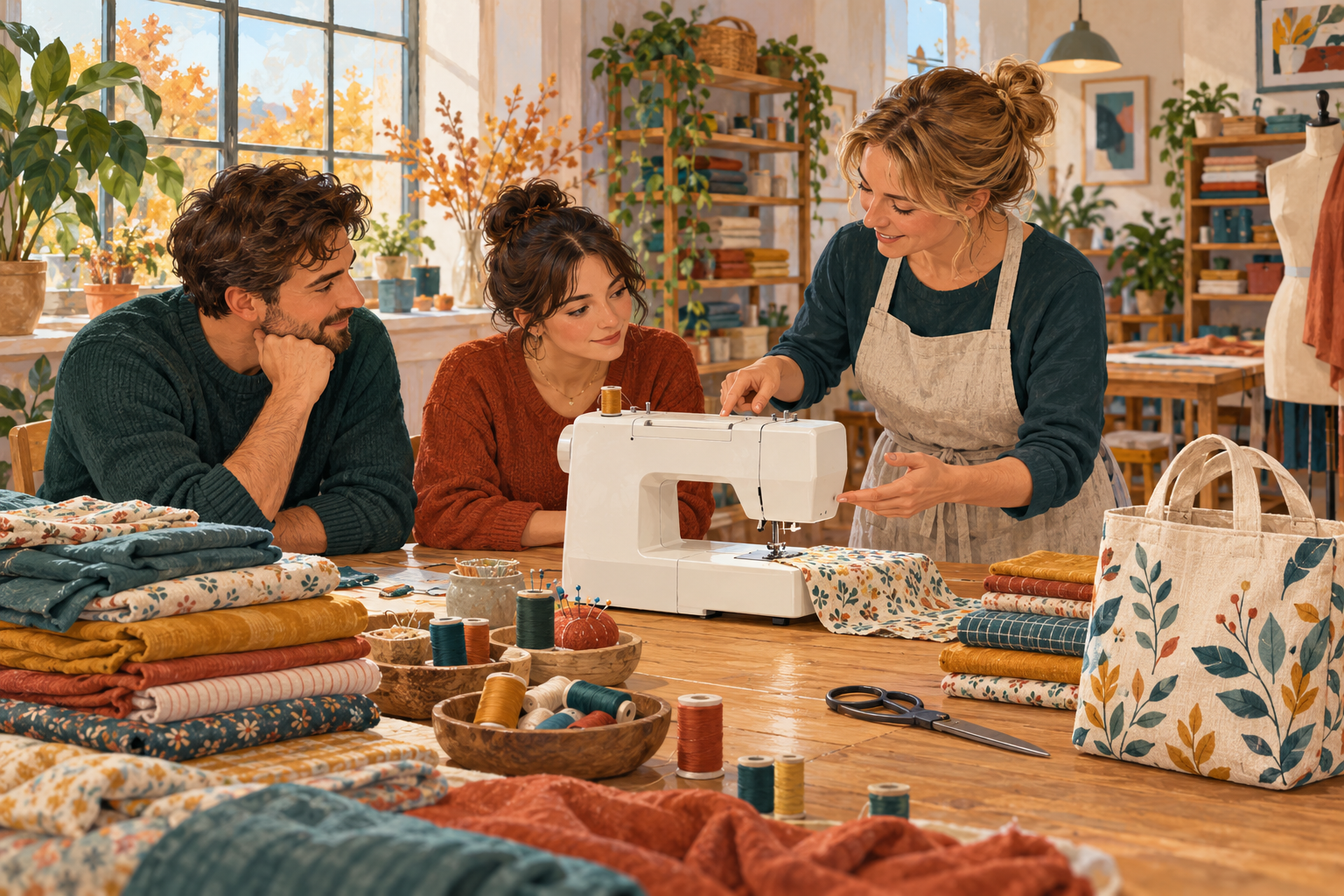
Making a cloth tote or finally getting to know an unused sewing machine can be a rewarding way to spend your free time. Before booking a class, look closely at its format. A session built around individual projects asks different things of you from a guided introduction to the machine. These questions help you plan a first sewing class in Germany before spending money on equipment and fabric.
1. Be specific about your starting point
Write one sentence describing your experience: “I have never operated a sewing machine” or “I can sew straight seams but need help cutting out a pattern”. This gives the tutor something useful to respond to. A beginner label alone does not tell you how much instruction the course includes.
Look for actual learning steps. One VHS Böblingen-Sindelfingen course describes machine functions and basic exercises before a further project. For your own choice, ask what happens in the first session and whether everyone starts together or works on different projects.
2. Check the machine arrangements before booking
You do not need to own a machine to start searching. A researched VHS Hannover beginner course allows learners to use a VHS machine or bring their own. The Karlsruhe example requires a working personal machine. These arrangements belong to individual courses; obtain explicit confirmation of any loan machine you need.
If you want to bring your machine, ask which accessories are needed for that particular model. Check the manual, foot pedal, power cable, suitable bobbins and presser feet. This packing prompt cannot replace the tutor’s equipment list. If your machine has been unused for a long time, establish whether the class provides an introduction or also helps with technical faults.
3. Pick a modest learning goal
Think about what you want to do more confidently afterwards: prepare the machine, understand a simple pattern or complete a manageable item. The Hannover example uses simple bag projects. A set project can make choosing easier because you have fewer decisions to make before signing up.
If you want to make a particular garment, send the tutor a short description first. Ask what skills it requires and which stages can realistically receive support within the booked time. Leave room for questions and practice. Understanding one step with guidance can be more useful for future hobbies than overloading your first afternoon.
4. Agree the materials before buying them
Request a list separating tools, practice materials and fabric for the actual project. The Böblingen-Sindelfingen example discusses materials for the next project in advance. Do not automatically use another course’s shopping list for your own session.
Ask the tutor directly about the required quantity, width and properties of project fabric. Check whether you should prepare it beforehand and whether existing offcuts are suitable. Wait until the project is agreed before buying fastenings or interfacing. This keeps purchases tied to what your class actually needs.
5. Compare the whole budget and every date
Alongside the fee, list fabric, accessories, possible machine hire and travel. The Karlsruhe example lists materials as an additional cost. Use that as a prompt to ask about your chosen class; one provider’s price is no national benchmark. Also establish when and how extra costs are paid.
A full day and several evening sessions suit different schedules. Check every date, including breaks and the journey home. For a series, keep later sessions free as well as the first. Before enrolling, ask whether there is work between meetings and whether you need access to a machine at home.
6. Plan the arrival and workspace
When bringing a machine, consider the route from parking or public transport to the classroom. If relevant, ask the venue about lifts, steps, table height and help carrying equipment. Explain specific access requirements early so the answer relates to the actual room.
Pack the confirmed equipment list and your booking confirmation, and keep your machine questions handy. Ask for an explanation of the controls before starting. If attending with a friend, both of you need a confirmed place. Agree a shared learning goal without expecting to work at exactly the same pace.
7. Use five answers to choose your booking
A class becomes easier to compare when you know five things: Does the level fit? Which machine is available? What must you bring? What is the full starting cost? Which dates are included? If something is missing, send a short enquiry with the course number and your experience.
For more leisure ideas, open the eVants event overview and then check each organiser’s original page. The VHS examples explain different formats; they do not establish that these classes are listed on eVants or that places are available. A course that has already started is not a suggestion to join midway.
Editorial note and image
Researched on 19 October 2026 using three original adult education centre pages. The comparison, packing and planning suggestions are editorial aids; rely on the information for your particular booking. The hero is an AI-generated illustration of a fictional sewing studio, not a photograph of an actual class.