
Your first papermaking workshop: from pulp to a handmade sheet
Try making one sheet or spend longer exploring the craft? Choose a paper activity that fits your outing.
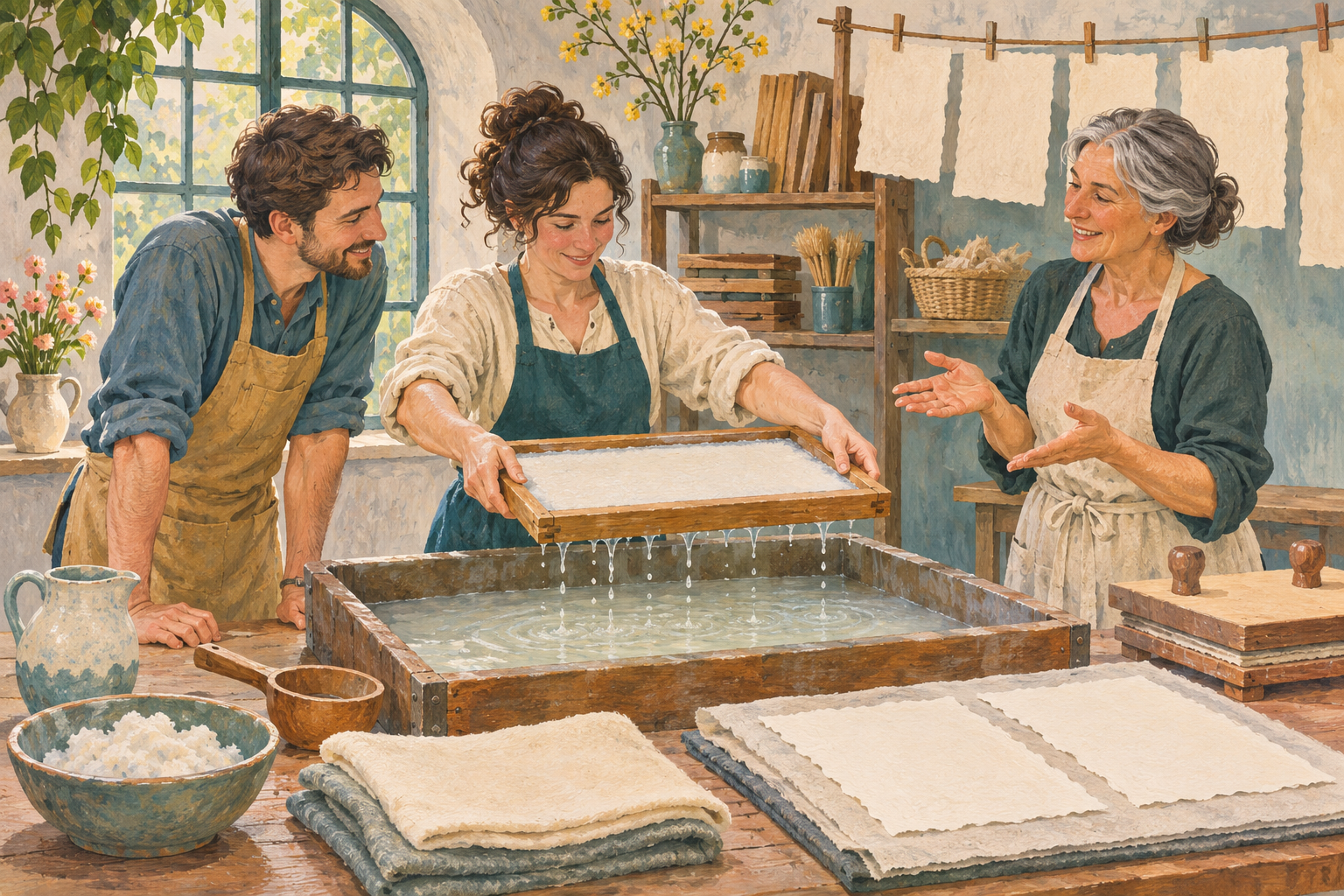
Lifting your own sheet from a vat makes a familiar material newly interesting. For a creative outing in Germany, read the scope of the activity carefully: a brief hands-on station serves different wishes from a supervised workshop. These steps help you find the right format and work out how to get your result home.
1. Try it briefly or book a class?
Agree what you want to do first. Would you like to hold the mould once, design several sheets or explore the process in detail? Look for specific activities in the description. A drop-in opportunity can suit a spontaneous museum visit; for sustained practice, seek an explicitly supervised class.
Alte Dombach Paper Mill in Bergisch Gladbach is one local example. Its permanent exhibition page says visitors can make paper without advance registration. That does not establish a booking rule for other institutions or special programmes.
2. Identify the steps you will actually do
Forming a sheet is only part of making paper. The Dombach exhibition also explains pulp preparation, drying and subsequent processing. Ask which stages you will perform in a workshop and which the team prepares.
If you want to experiment with colours or inclusions, check that this is part of the programme. Bring your own materials only by agreement. For a beginner, a clearly described small task is often more useful than a long list of possible techniques without assured practice time.
3. Check instruction, language and access
Ask about group size, teaching language and how explanation and personal practice are balanced. With children, check the stated age range and what accompanying adults are expected to do. Find out whether adults participate, simply accompany or need their own tickets.
Describe support needs specifically. Can you work seated? How high is the vat, and can someone help hold the mould? General building accessibility information does not answer every workshop question. Alte Dombach’s visitor page provides a contact for individual support.
4. Add up admission, materials and time
Compare the full price for your group. Does it include museum admission, instruction and consumables? Alte Dombach notes that events have separate admission charges. An ordinary museum ticket therefore does not automatically explain the price of a special programme.
Save the start time, meeting point and latest sensible arrival time. Allow a buffer for travel and finding your way. Clothes that tolerate small splashes are a practical choice; ask whether aprons are supplied or needed. Avoid buying equipment speculatively for a first attempt.
5. Ask about drying and transport before booking
A newly formed sheet is not automatically ready to pack. Ask whether sheets dry on site, need collecting later or can be taken away in a form recommended by the venue. Check whether postage is available and costs extra.
If you need something to carry the paper in, ask for the required size and material. Plan the rest of your day accordingly: a long city walk with a delicate piece may be inconvenient. Ask when and how you can use the paper at home.
6. Start with one small creative question
Choose just one question for your first attempt: how does the surface or the shape of the edge change? Watch the demonstration carefully and ask for feedback. An uneven sheet can be part of the appeal of working by hand.
For more creative outings, open “Explore events” in the eVants catalogue and check the original source for each date. The museum mentioned here is a researched example; this guide does not claim that its activities are currently listed on eVants.
Research and image
Official sources checked on 19 November 2026. The planning tips are editorial recommendations; the provider confirms current services and conditions. The hero image is an AI-generated illustration of a fictional paper workshop.