
Your first screen-printing workshop: choose the design, materials and course
Your own print on paper or fabric: choose a suitable introduction and confirm what to bring before booking.
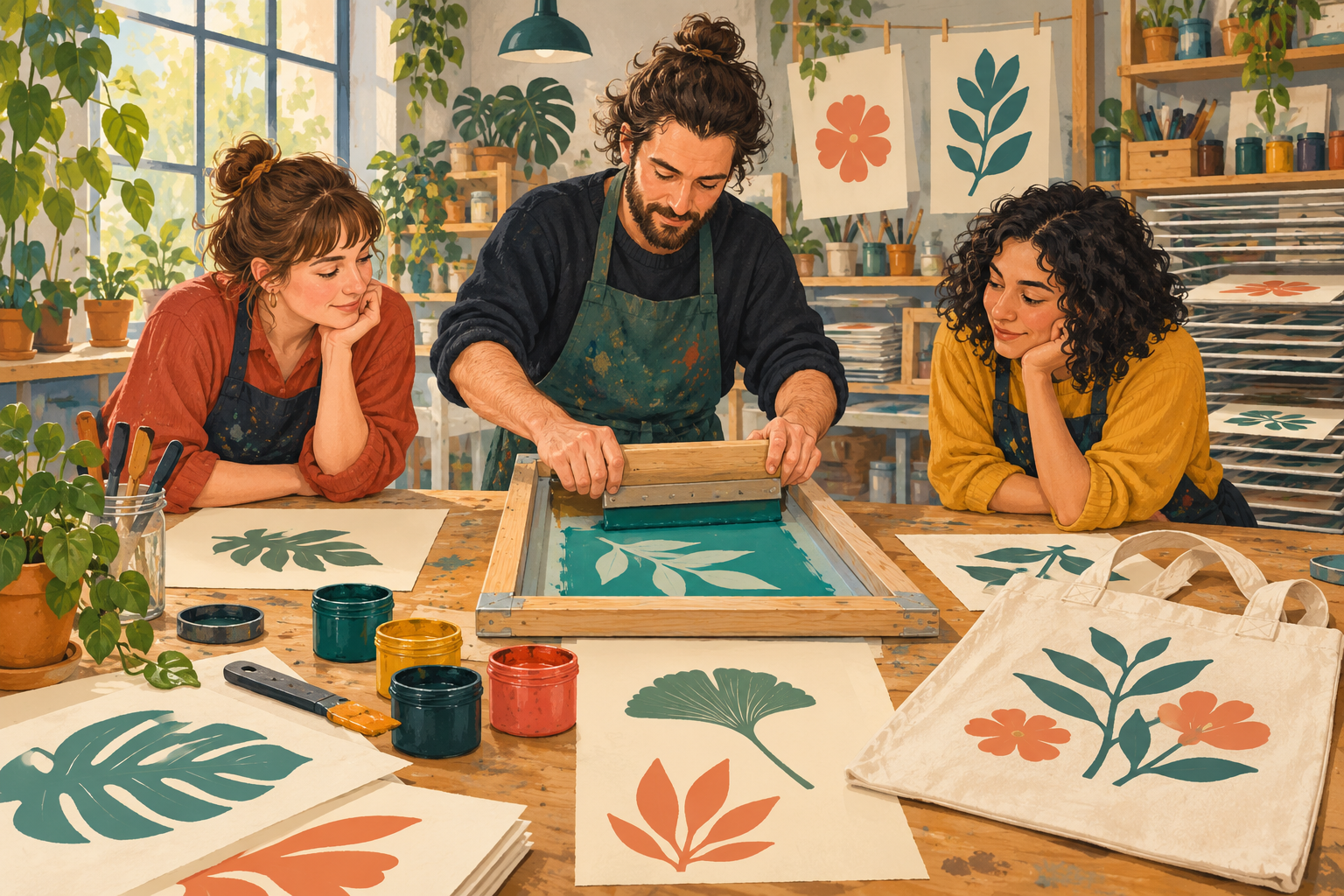
Would you like a creative afternoon and something you have printed yourself to take home? A screen-printing workshop can be a good starting point. Choosing one involves more than an attractive sample picture: some sessions start with your own design, while others provide motifs. This guide helps you choose a first course in Germany by method, printing surface and preparation.
1. Choose your aim: try the process or realise your own design
Before searching, think about what appeals to you: trying a technique with other people, or producing a particular print for your home? An open-ended outcome is fine for a relaxed first attempt. If you already have a specific idea, look for a course description that explains how participants can contribute their own artwork.
For example, a researched VHS Bielefeld introductory session provides motifs for fabric and paper. VHS Regensburg describes a process from your own design through exposure to printing. These differences help you choose more effectively than the word “workshop” on its own.
2. Ask about the method and preparation
Similar course titles can refer to different ways of working. In one researched Cologne VHS offer, participants skip exposure and paint designs directly onto the frame using emulsion paint. A course involving exposure raises different preparation questions. Before booking, ask which stages you will learn yourself.
A specific enquiry helps: “I have never printed before. Will we use prepared designs, paint on the frame or prepare our own artwork?” If you need to send a file, confirm its format, dimensions and deadline with the instructor. Hold off buying specialist software or your own screen until these requirements are clear.
3. Keep your first design manageable
For a course using your own artwork, choose an idea you can describe in a few words. VHS Regensburg recommends simple, single-colour designs for beginners. As an editorial planning suggestion, consider a leaf, a clear geometric shape or a simplified drawing, then ask whether it can be achieved in the session.
If you are unsure, bring two versions: your preferred idea and a simpler alternative. Ask what print size the workshop supports and whether there is enough time for your plan. Your first result need not be a complete collection. Allow for a test print if the timetable and available materials permit it.
4. Confirm paper or fabric with the studio
Before buying materials, choose a printing surface and ask about the specific requirements. For its offer, VHS Bielefeld lists absorbent, uncoated paper and recommends washing and ironing new textiles beforehand. Cologne asks for light-coloured cotton textiles. These are requirements for those particular offers; follow your chosen workshop’s own packing information.
When asking about a bag or shirt you already own, include its fabric composition. Establish whether fabric, paper and test pieces are included or need to be supplied by you. As a practical editorial suggestion, use something you are not especially attached to for a first attempt. Add a spare only after checking with the studio.
5. Compare the course fee and material costs together
For two suitable options, record the full outlay: tuition, extra materials, any deposit and the printing surfaces you provide. Regensburg lists material costs and a refundable screen deposit separately. Compare what is included rather than assuming the first visible amount is the total. Confirm current prices and payment arrangements with the provider.
Also check the detailed session dates and attendance expectations. Every required session of a course needs to fit your calendar. If a short summary conflicts with the individual timetable, ask before booking. For a shared outing, establish whether each person works on a separate design and needs an individual registration.
6. Plan working clothes, drying and the journey home
Set out clothing that can get stained and pack only the tools requested. Cologne’s list, for example, also includes brushes and a small hairdryer. This does not make them universal requirements: confirm what the studio supplies and what you personally need to bring.
Ask when the print can leave the studio, how it should be transported and whether any further treatment is required. Save the instructor’s specific care instructions rather than borrowing them from a different studio. Plan a journey home with enough space for the finished piece. For further creative leisure ideas, explore the eVants event catalogue and check each date against its original source.
Sources and illustration
Sources checked on 18 October 2026. The linked course pages are researched examples of formats, including a Bielefeld session whose date has passed. We make no claim about available places or inclusion of these courses on eVants. Comparison, design and packing suggestions are editorial planning aids. The hero image is an AI-generated illustration of a fictional studio and does not show an actual course.