
Planning your first embroidery class: start with a small design
A hoop and a simple idea can be enough. First find out what your class provides and which materials you actually need.
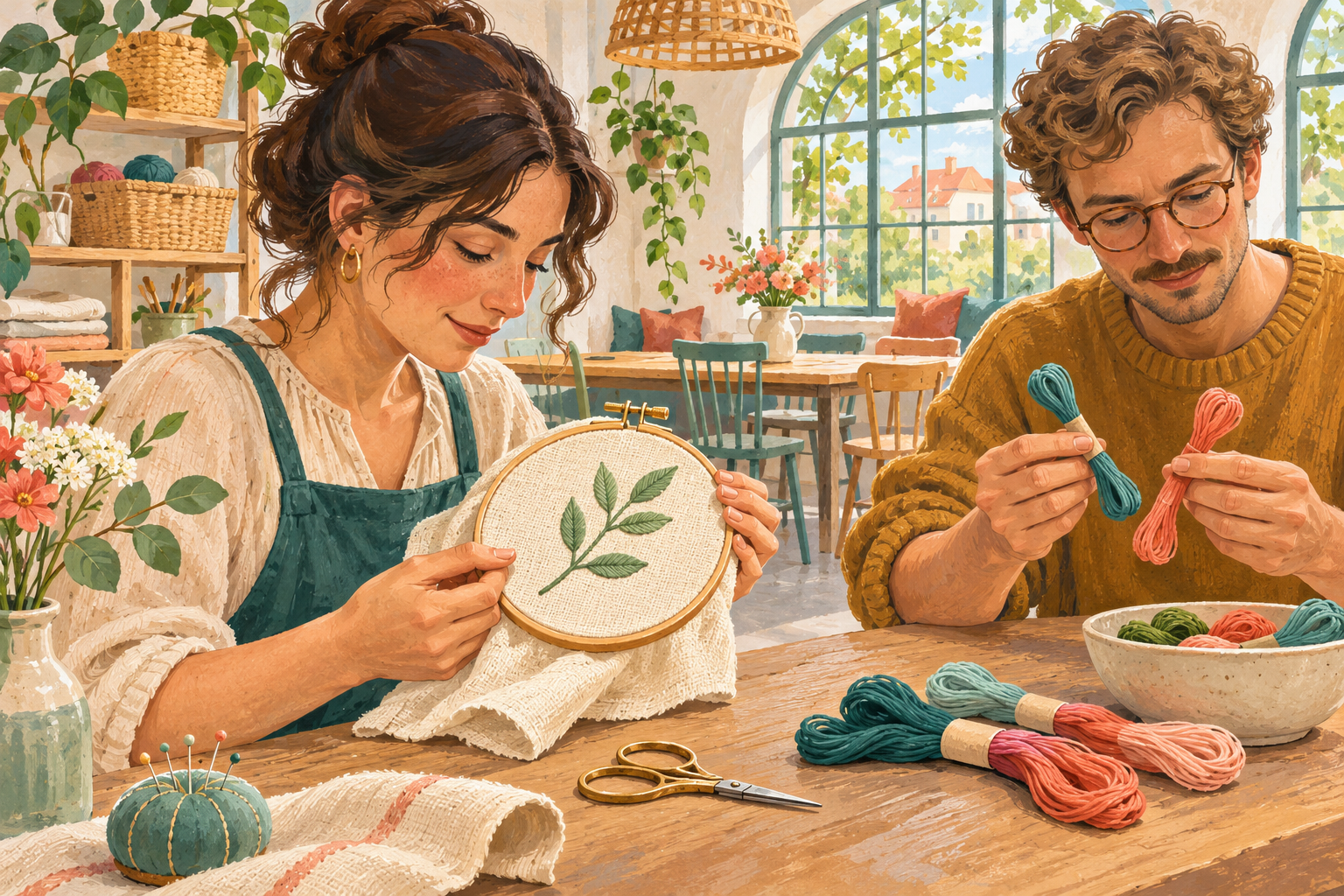
Looking for a beginner embroidery class in Germany? Compare the learning goal, schedule and equipment before booking. A social crafting session and a guided introduction call for different preparation. These questions help you choose a hand embroidery class that fits your pace.
1. Search specifically for beginner hand embroidery
Search for “Stickkurs Anfänger” or “Handsticken Workshop” with your town. Check the original description for entry requirements. “Sticken” alone does not tell you whether you will work by hand or use a machine. Ask if this is unclear.
Define your aim: practising basic stitches, making a picture or decorating clothing. Tell the tutor before booking so they can assess whether the technique and scope fit the class.
2. Compare a single workshop with a course series
A single session suits trying a craft. A series may suit working at home between meetings and bringing questions back. Check every date and ask what happens if you miss one.
Hamburger Volkshochschule describes “Sticken – Stich für Stich kreativ” as requiring no previous knowledge, with meetings at monthly intervals. It illustrates supported work on an individual project. Check booking availability on the provider’s page.
3. Check supplies and extra costs before shopping
Request a list covering fabric, thread, needles and hoop. Ask what is supplied, lent or charged separately. Wait before buying large kits: equipment should match the class. Compare the fee, supplies and travel costs.
In the Hamburg example, beginners without equipment can obtain needles, thread and fabric for a contribution of up to ten euros; hoops can be borrowed. Other providers may have different arrangements.
4. Choose a manageable first project
Bring a simple idea, such as a small leaf on a separate fabric sample. Ask whether it fits the introduction. Before bringing favourite clothing, send the tutor a photograph and fabric details. Do not assume every fabric suits the technique.
Start with a sample before working on the final piece. Ask for a demonstration of threading, starting, finishing and using the hoop. A smaller design gives you room to repeat steps and ask questions.
5. Think about your workspace and continuing at home
Before booking, discuss your needs for lighting, seating or handling small objects. Ask about the actual room and possible adjustments. A general accessibility statement may not cover your individual requirements.
Bring the agreed supplies and store needles and scissors securely. If permitted, photograph your progress and write down the next steps. Keep questions for the next session and store the materials together so you can easily resume your project.
6. Your booking checklist
Is this suitable for complete beginners? Will we work by hand? Does my design fit the available time? What is included and what must I bring? With these answers you can compare classes. Use “Explore events” to find more creative activities in the eVants event catalogue.
Research and image
Original source checked on 12 November 2026. The Hamburg class illustrates a format, not guaranteed availability. Other planning steps are editorial suggestions. The hero image is an AI-generated illustration of a fictional studio.