
Your first arthouse cinema visit: Choose a film, language version and evening
A good cinema evening starts with the right screening. Find a film whose language, format and setting suit you.
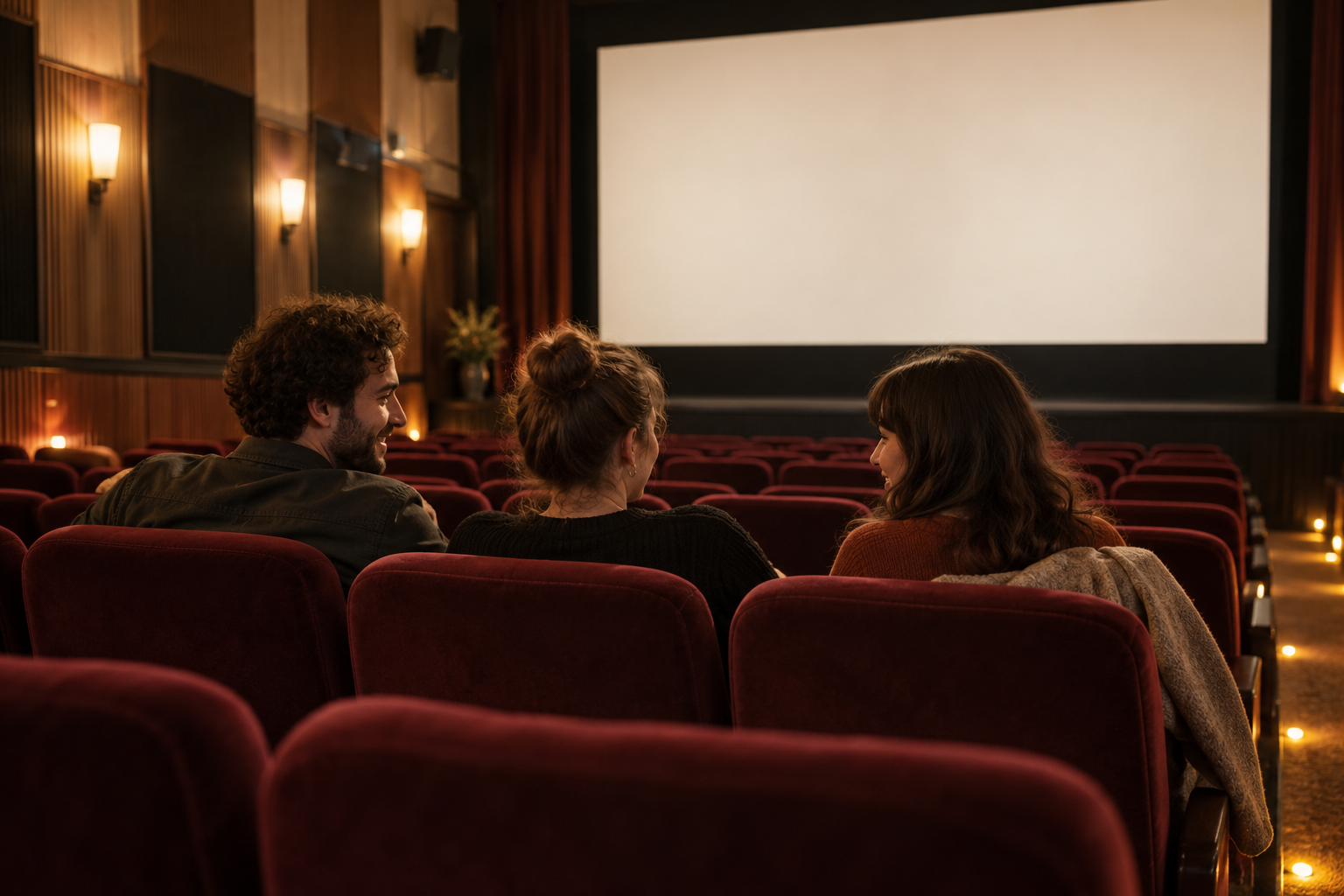
Would you like to try an arthouse cinema but feel unfamiliar with its film seasons and the abbreviations beside screening times? This guide takes you from choosing a film to talking about it afterwards. It focuses on a first visit to a curated film programme in Germany: what is showing, which language version is offered, and what this particular evening includes. Verified original sources provide examples from Hamburg, Berlin and Frankfurt. The practical planning suggestions come from the eVants editorial team.
1. Start with your interests rather than prior knowledge
Begin with a question that sparks your curiosity: would you like to watch a documentary, discover an older film on a big screen or try an unfamiliar storytelling format? Read a short synopsis and check the genre and running time. Our suggestion: choose a film whose subject appeals to you for your first visit, rather than booking an entire season at once. You do not need to acquire film history knowledge before going.
The DFF cinema describes a programme of historical and contemporary works, thematic seasons and accompanying discussions. This is an example of curated film culture, not a promise about every arthouse cinema. Check whether a particular season provides useful context and whether an individual screening works without attending earlier sessions. A short introduction may offer orientation; you can also approach the film through your own observations.
2. Read OmU, OV and OmeU before booking
Yorck Kinogruppe explains its language labels as follows: OmU means the original version with German subtitles, OV the original version without subtitles, and OmeU the original version with English subtitles. DF denotes German-language audio there. The label for your particular screening is what matters. At another cinema, read its own key and ask if the subtitle language is unclear. An English film title does not establish which audio and subtitle version will be shown.
Our suggestion for a group: first agree which spoken and written languages everyone understands. Anyone who finds reading tiring can deliberately choose another version. Do not confuse an original-language version with a particular genre or level of difficulty. The label initially describes the language format. Compare the date, time and abbreviation together to avoid buying tickets for different screenings by mistake.
3. Distinguish a screening from an evening with discussion
Include a film discussion in your plan only when it is announced for that particular screening. For example, the DFF lists audience discussions with film professionals in its “Was tut sich – im deutschen Film?” series. This does not guarantee a discussion at every screening. Look for named guests, an introduction or discussion and check whether it takes place before or after the film. Ask the cinema if the schedule is unclear.
Our suggestion: allow time beyond the film’s running time when a discussion is advertised. You can simply listen at first. If you would like to ask a question, note a specific impression after the credits, such as a character’s perspective or a striking visual choice. A short, open question makes conversation easier. Avoid a lengthy retelling of the plot and leave room for other audience members.
4. Check the current weekly programme
Abaton in Hamburg prepares its programme weekly. Its own FAQ explains that decisions about keeping a film the following week are often made at short notice; the new programme is available there from Tuesday afternoon. This is a venue-specific example. Base your plans on an actual published screening with a date and time, rather than assuming that a film will definitely still be showing next weekend.
Our planning suggestion: initially keep two suitable films or time slots in mind. Then check the cinema’s original website before agreeing a meeting place with your group. A film description and a screening date are different pieces of information: the description may stay online longer than the run. For re-releases, also check the stated version and running time instead of treating every screening of the same title as identical.
5. Confirm tickets, seating and access
Before paying, check whether you select a reserved seat, whether the ticket covers the entire special event, and which conditions the cinema lists for changes. Abaton’s FAQ states that reservations are currently unavailable there. Do not apply this to other cinemas. Our suggestion: save your purchase confirmation somewhere you can quickly check the date, cinema, auditorium and screening while travelling.
Access requires specific information. For Berlin’s Odeon, Yorck describes five steps at the foyer entrance, a possible auditorium entrance through the courtyard, and no wheelchair-accessible toilet. This example shows why a general label is insufficient for planning your visit. If needed, ask about the actual route from the entrance to your seat, the toilet and available assistance. Confirm any necessary arrangements before booking.
6. Plan an unhurried arrival and time afterwards
Our suggestion: arrive with enough time to find the box office and the right auditorium. Do not automatically rely on a long advertising block to compensate for arriving late. Read the specific screening’s guidance about starting times and late admission. Silence and put away your phone before the film; a lit screen also distracts people in neighbouring rows.
Your return journey needs to allow for more than the film’s running time when an introduction or discussion is included. If attending as a group, agree where to meet after leaving the auditorium. Our suggestion for the conversation afterwards: start with a moment that stayed with you rather than immediately trying to agree on a rating. Different impressions can enrich an evening with an unfamiliar film.
Checklist for your first arthouse cinema evening
Before booking: do the subject and running time suit you? Are the date and auditorium confirmed? Have you checked the audio and subtitle languages together? Is an introduction or discussion explicitly advertised? Have you confirmed seating rules, what the ticket includes and any necessary access arrangements?
Before leaving: is your confirmation handy, have you checked the latest programme again, and does the return journey allow for a possible discussion? These quick checks turn an interesting film idea into a well-coordinated evening.
Discover film events on eVants
Search the eVants event catalogue by place and date, using terms such as “Film”, “Kino” or “Filmgespräch”. For a suitable result, open the original source and check the version and booking information there. If your desired screening does not appear, continue directly on the cinema’s website.
Sources checked on 14 October 2026. The cinemas mentioned are verified examples; this article does not claim current eVants listings or available tickets. The hero image is an AI-generated illustration of a fictional cinema and does not document a real screening.