
Your first classical concert: Choose a programme and enjoy listening
You do not need a music degree for a concert evening. Choose a suitable programme and find your way through works, intervals and applause.
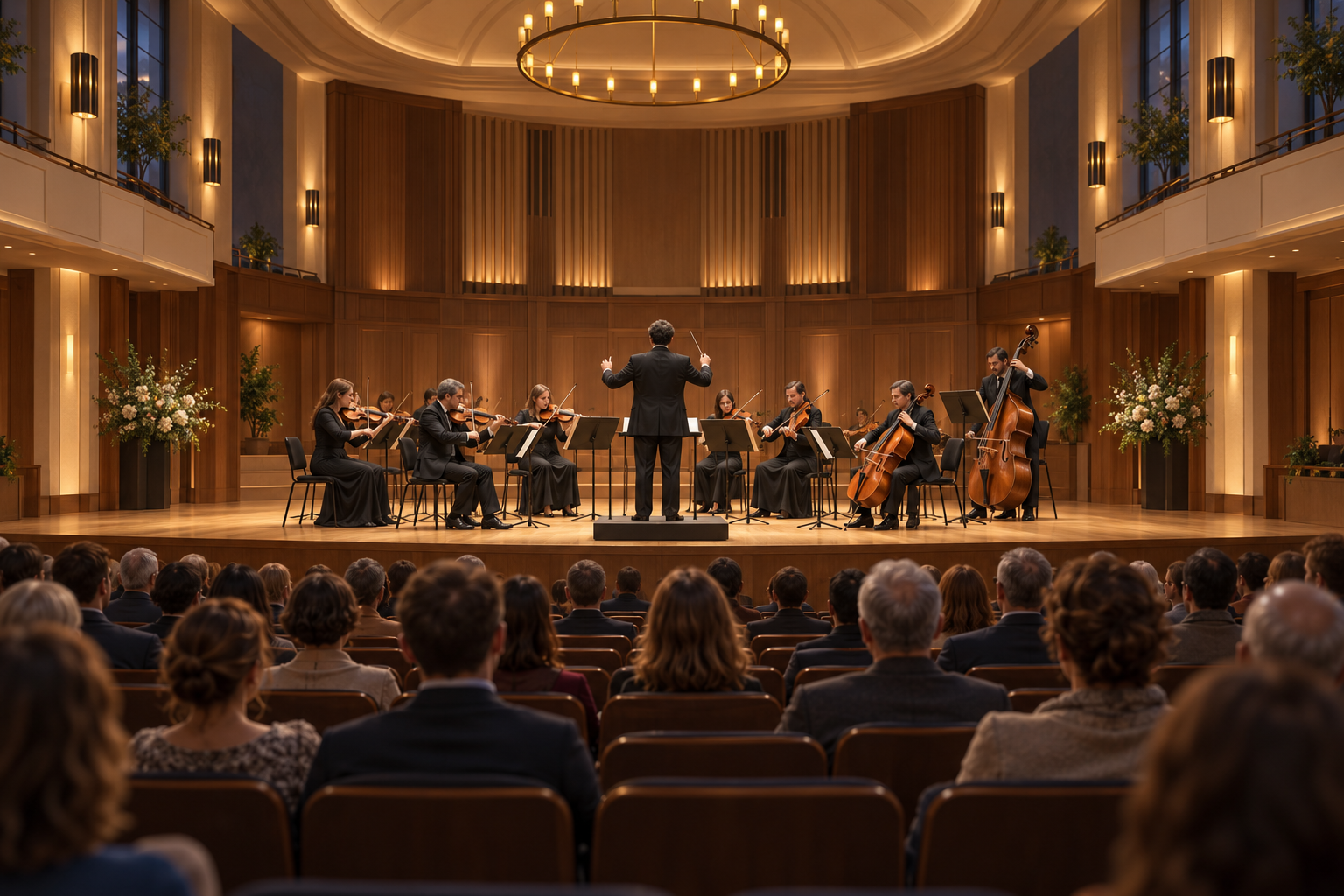
Would you like to attend your first classical concert but wonder which programme to choose, what to wear and when to clap? This guide helps you select a concert in Germany and settle into the hall. It focuses on listening and finding your way through the musical programme. Official information from Berlin and Hamburg provides specific venue examples; the other planning tips are editorial suggestions.
1. Choose by music and format
Our suggestion: begin with a musical question rather than the largest venue. Would you like to hear many instruments together, follow an individual solo voice or experience a small ensemble? Read who is performing and which works are listed in the announcement. Then decide whether the described line-up makes you curious. The word classical on its own tells you little about what the evening will feel like.
For an initial selection, compare two or three advertised programmes. If you want, listen to a short excerpt of a listed work without making the recording your benchmark for the live performance. Look for descriptions such as moderated, family concert or with an introduction. Ask the provider if these do not explain the intended audience. A family format does not automatically suit every age, and a moderated evening does not automatically suit every language.
2. Read the sequence of works, not just the concert title
A concert title is an invitation; the programme list helps you find your way. Our editorial suggestion: look for composers, work titles, individual sections and a marked interval. Above all, notice how many works are listed. If the programme contains specialist terms, you do not need to learn them all. It is more useful to follow the order and avoid mistaking every brief silence for the end of the evening.
The Elbphilharmonie explains that many classical works have several movements, between which applause is not usual. If unsure, it recommends waiting and watching the stage; bows offer a clue. Our suggestion: read the work’s structure before the performance and keep your programme still during the music. You can focus on the sound without reading along through every section.
3. Use an introduction if one is offered
The Berliner Philharmoniker list introductions 45 minutes before their symphony concerts; their calendar gives details for other formats. This is specific to that venue. Check whether your chosen event has an introduction, where it takes place and which language it uses. Allow separately for its start time when planning your journey.
Our suggestion: take just one listening question from an introduction. You might notice a recurring motif, a change of instruments or the contrast between quiet and powerful passages. It need not become a test. If there is no introduction, the programme list is enough for a first visit. Read longer background material afterwards if a work has sparked your curiosity.
4. Check the organiser, ticket and seat together
The Berliner Philharmoniker’s ticket information distinguishes their own concerts from guest events and directs buyers to the relevant organiser for those. Follow the official ticket route in your event’s original source. A familiar hall name does not confirm either the performing line-up or the provider of your ticket.
Our planning suggestion: set a total budget before buying, including displayed fees and travel. Open the seating plan and check the block, row, possible restricted views and type of place offered. Ask about anything unclear instead of assuming that a higher price category automatically suits you better. If you are attending together, agree on the date and seating preferences first. If you need a step-free route or a particular seat, discuss this with the venue before booking.
5. Plan arrival, clothing and access for your event
Philharmonie Berlin lists building admission an hour and hall admission 30 minutes before the concert; late admission is not guaranteed. Berlin and the Elbphilharmonie describe a free choice of clothing. Do not apply these admission times to other venues. Check the current entrance, hall and start details for your specific concert.
Our clothing suggestion: choose something comfortable for sitting and for the journey there and back. Allow time to find your way, use the cloakroom and visit the toilets. If you have particular access requirements, ask about the full route to your seat and the assistance available. A building photograph cannot answer those questions. If you need a specific connection home, check the expected overall duration and possible interval; counting the works alone is not enough.
6. Listen attentively without needing to understand everything
Our editorial suggestion: choose a simple focus at the start. Which tone colour stands out? When does the mood change? How do different instruments respond to one another? If your attention drifts, return to the music at the next audible change. You do not need to recognise every theme or share your companion’s impressions. A work heard live for the first time can leave questions unanswered.
The Elbphilharmonie asks for silent or switched-off electronic devices and prohibits recordings during concerts. Check your venue’s instructions and avoid conversations or rustling objects during the music. If you need to leave, follow the staff’s directions; re-entry may depend on the programme. Our interval suggestion: discuss a particular listening impression without having to reach an overall verdict immediately.
Checklist for your first classical concert
Before buying: have you read the line-up and order of works? Does the format suit you, including the language of any moderation? Have you identified the organiser and official ticket route? Have you checked the full price, type of place, view and your access requirements?
Before leaving: have you planned separately for an introduction, admission and the concert start? Have you checked current venue information, the entrance and your journey home? In the hall: silence devices, keep the structure of works in mind and wait briefly if unsure about applause. Afterwards, remember one sound or work you would like to explore further.
Discover classical concerts on eVants
Search the eVants event overview by location, date range and terms such as Klassik, Sinfoniekonzert or Kammermusik. Open the original source for a promising result and compare the programme, venue, ticket route and current instructions. If you cannot find a suitable date, extend your search to the local concert provider. Use the specific announcement to decide which music and format suit your first visit.
Sources checked on 11 October 2026. The venue examples offer guidance and do not claim current eVants listings or ticket availability. Planning suggestions are editorial. The hero image is an AI-generated illustration of a fictional ensemble in a fictional concert hall.