
Puppet theatre with children: plan your first visit
Which production suits your child, and what needs checking before booking? A guide to a first family visit.
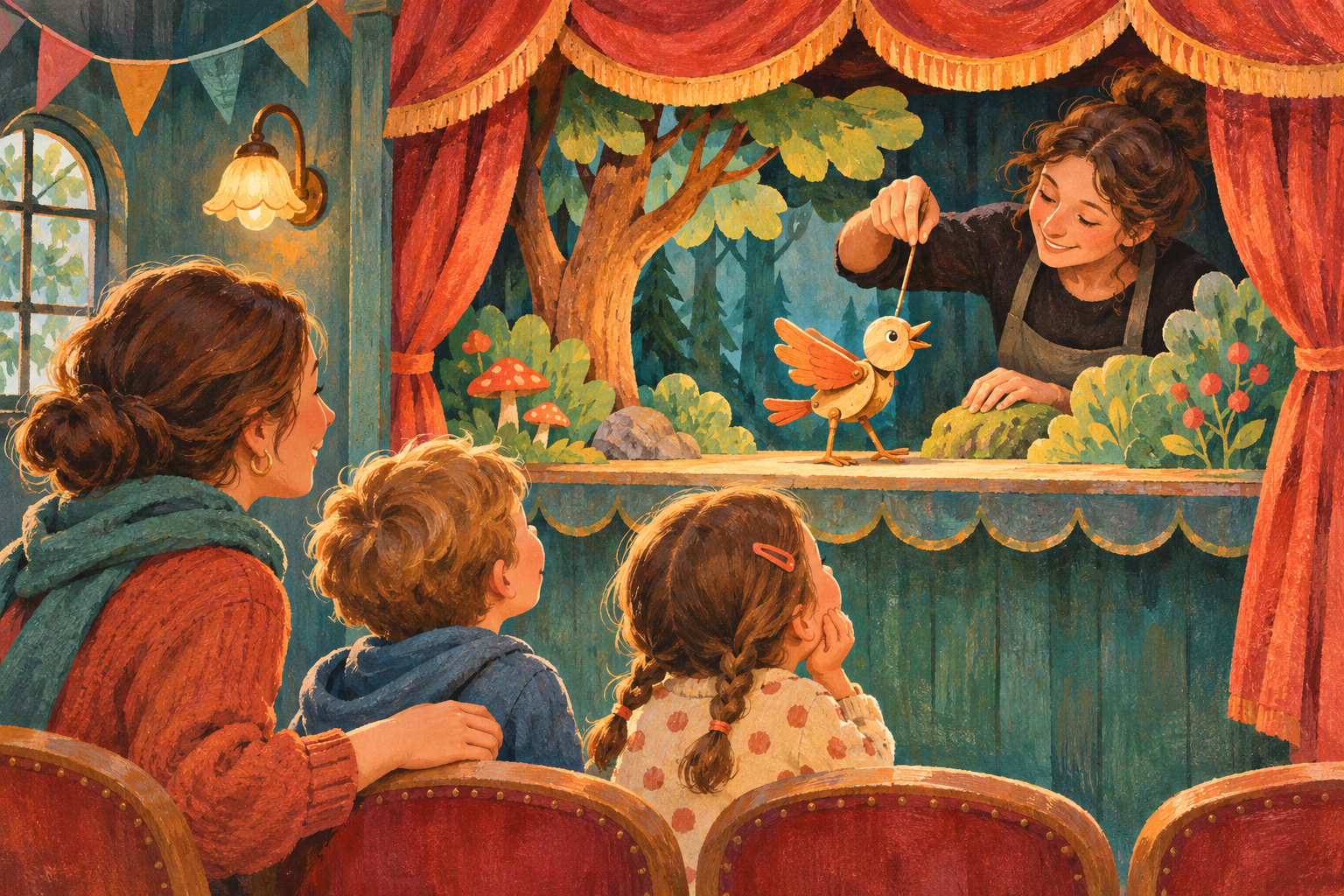
A wooden bird comes to life; an everyday object becomes a character. Puppet and object theatre can offer children a distinctive introduction to live performance. Choose a first visit around the production and your child’s needs. This guide helps turn an idea into a manageable family outing in Germany.
1. Discover the performance style together
Look in the production description for puppets, objects, marionettes and visible performers. A familiar fairy tale does not tell you how it will be staged. Look at an authorised production photo with your child and explain what might happen on stage without revealing the whole story.
KOLK 17 in Lübeck explains that performers remain visible in open puppet theatre. The venue presents different styles and points readers to individual production descriptions. This is particularly useful if your child expects a traditional marionette stage.
2. Check age guidance, duration and language together
Follow the age guidance for the specific production and ask if it is unclear. Check running time, language, intervals and any information about darkness or loud moments. A short performance does not automatically suit every young child; consider the whole offer.
For the example of a two-year-old attending a production for ages four and up, KOLK 17 advises choosing a younger age group or waiting. When siblings attend, start with the youngest child’s needs. Knowing the story does not replace the production’s age guidance.
3. Confirm seats and the family budget
Check who needs a ticket and whether seats are allocated. Ask about sightlines for small children, possible booster seats and access requirements. Communicate wheelchair seating or other specific needs early so the venue can give a definite answer.
Compare the total for everyone, including any booking fees and travel. A reservation, paid ticket and collection deadline may be separate steps. Save the confirmation and check the date, time and venue before making a firm family plan.
4. Allow time to settle in
Add a buffer for the cloakroom, toilets and finding your way around. Check the venue’s admission rules: Puppentheater Magdeburg states that admission starts 15 minutes before the performance and latecomers cannot enter. This is a rule at that particular venue, rather than a standard for all puppet theatres.
Briefly explain that other families will be watching together and the performance starts at a set time. Ask staff in advance how leaving the auditorium briefly and any return are handled. Do not promise that you can simply return to your seat without confirmation.
5. Keep the outing manageable
Leave some free time before and after the performance. A meal, a break and a calm journey home may work better than a packed schedule. Check food, drinks, pushchairs and cloakroom arrangements with the venue. A museum section at the same location is a separate offer with its own rules.
If your child needs a break during the visit, speak quietly to the front-of-house team. Afterwards, a simple question is enough: Which character do you remember? Your child does not have to retell the plot or judge the performance.
6. Checklist before buying tickets
Check six things: age suitability, performance style, duration and language, tickets for everyone, access and sightlines, and travel with a buffer. Note unresolved questions and get answers from the theatre before booking. Recheck the original information shortly before your visit.
Use “Explore events” to reach the eVants event listings for more leisure ideas. The theatres mentioned are researched examples; this does not claim that they are currently listed on eVants. Sources checked: 26 November 2026. The hero image is an AI-generated illustration of a fictional scene.