
Visiting a glassblowing demonstration: plan your time by the furnace
Watch the craft or try blowing a sphere? Choose the right glassmaking experience for your outing.
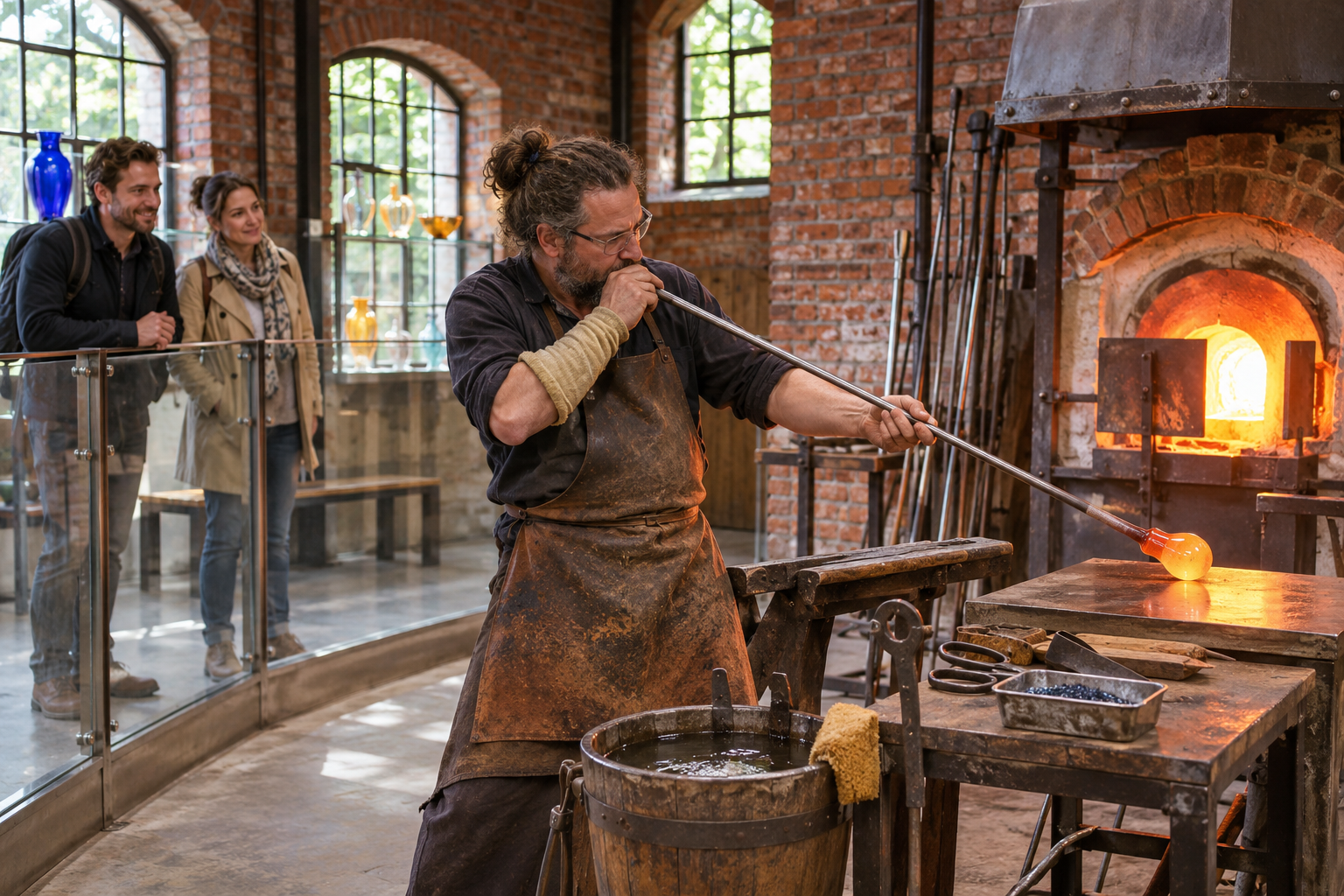
At a glass furnace, an everyday material becomes a fascinating reason for an outing. Yet an open glassworks museum does not automatically mean a narrated demonstration will be running when you arrive. This guide helps you plan a glassmaking visit in Germany around the format, daily schedule and needs of your group.
1. Demonstration, short activity or longer course?
Decide what you want to experience: watch a craftsperson, try a brief supervised activity or practise several stages. Look for those specific services in the description. A demonstration can fit into a museum tour; a dedicated course requires a different amount of time.
Baruther Glashütte’s studio page distinguishes narrated demonstrations, supervised glass-sphere blowing and glassmaking courses. This is a local example of different formats, not a promise that every museum offers all three.
2. Check production times separately from museum hours
Save the day of opening and the production schedule. Ask whether there is a scheduled demonstration or an opportunity to watch ongoing work. Recheck the original page shortly before travelling; for a long journey, contacting the venue directly is worthwhile.
Baruth explicitly warns of short-notice changes and day-dependent hands-on availability. Gernheim’s FAQ also explains a break for its glassmakers. Plan beyond the general opening window and avoid placing an essential appointment immediately after your visit.
3. Arrange a clear view and explanations you understand
Ask about language, group size and the viewing area. If the craft is new to you, explanations of the visible steps will help. A small group may make observation easier. For children, consider whether they will actually be able to see from their viewing position.
Gernheim explains its usual guided-group limit of 16 partly through sightlines and acoustics at the production demonstration. Larger groups should discuss their options directly. This local rule does not establish a universal limit for other glassworks.
4. Discuss paths, warmth and accompanying adults
Describe access needs specifically: are there seats at the viewing area, step-free routes and good wheelchair sightlines? Ask about conditions near the furnace if warmth or prolonged standing is difficult for you. General building information may not answer these questions.
Gernheim’s FAQ mentions historic cobbled or gravel paths and recommends discussing needs when booking. Wear comfortable sturdy shoes and respect barriers and staff instructions. Hands-on activities have their own age and accompanying-adult requirements.
5. Check the full price and collection arrangements
Before booking, establish whether the quoted price includes admission, instruction, materials and a finished object. For a practical activity, ask how much time you spend working and which stages the professional handles. A brief attempt is different from an extended course.
If you make something, explicitly ask about cooling time, collection, packaging and possible shipping. Plan your journey home afterwards. Avoid promising children an object they can take straight away until the venue confirms the arrangements. You need no tools of your own simply to watch a demonstration.
6. Take one observation question
Bring a simple question: how does the craftsperson keep the shape even, and when is the object reheated? Watch quietly first and ask at a suitable moment. Check the photography rules and keep other visitors’ routes clear.
For more outing ideas, open “Explore events” in the eVants event catalogue and check the original source for each date. The museums above are researched examples; this article does not claim their activities are currently listed on eVants.
Research and image
Official sources checked on 20 November 2026. Planning advice is editorial; the provider confirms current schedules and services. The hero image is an AI-generated illustration of a fictional museum workshop.