
Visit a show mine: planning your first underground outing
Industrial history comes into focus underground. Use these questions to choose a visit that suits your group.
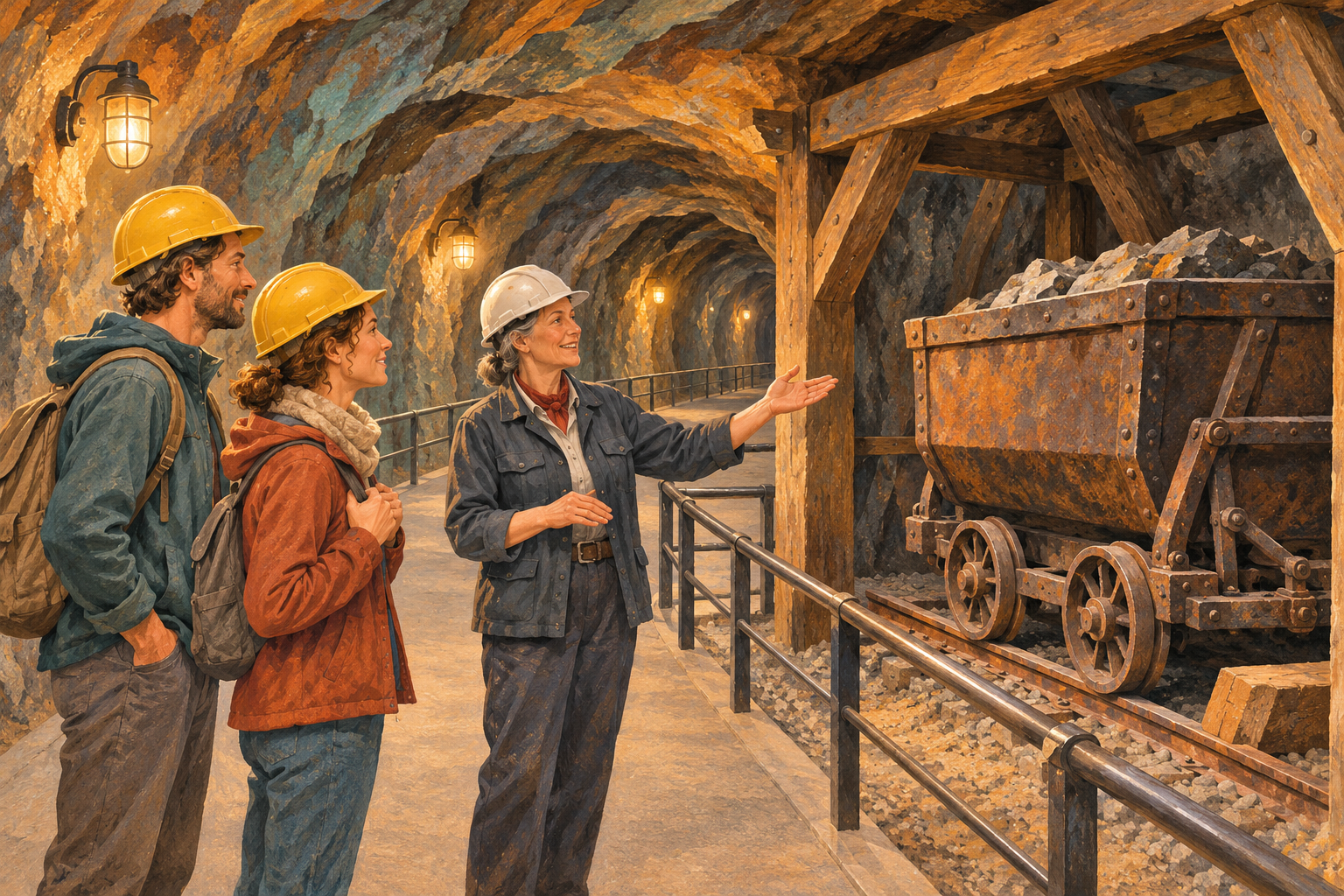
An underground visit offers a different perspective on work, technology and raw materials. Planning starts with a distinction between a former working mine and a reconstructed museum mine. This guide helps you choose a suitable venue in Germany and resolve practical questions before travelling.
1. Decide what kind of mine interests you
Compare each site’s description with your interests. Would you like to understand historical working conditions, see large machinery or explore regional geology? One specific interest is a more useful starting point than the most dramatic photograph.
The German Mining Museum Bochum was never itself a working colliery. Its demonstration mine is modelled on a real mine and lies around 20 metres underground. This illustrates why the description matters: a museum reconstruction and a former extraction site present history from different perspectives.
2. Check admission and tours separately
Opening hours alone do not tell you when you can enter underground areas. Read the selected venue’s current visitor page and programme. Check whether a guided tour is required, whether it needs a separate booking and which language is offered. Ask visitor services if the information is unclear.
For a group, record the tour meeting point separately from your arrival time at the building. Allow time for tickets, toilets and any equipment collection. Only arrange another activity that day once you know how long the whole visit is likely to take.
3. Discuss routes and individual needs
Ask about walking distances, steps, narrow sections, seats and the possibility of leaving a tour early. Discuss the access you need directly with the venue. A museum described as accessible may have different conditions in individual underground areas.
Explain the experience beforehand to children or companions who feel uncertain. Consider whether a shorter format would suit them better. Nobody needs to choose a long tour simply because others find it exciting. An exhibition above ground may be a better choice for your group.
4. Match clothing and bags to the route
Read local guidance on footwear, temperature and permitted bags. Ask which equipment is supplied and what you need to bring. Pack lightly so your hands remain free while walking and listening.
Bochum warns that contact with walls and ceilings or mineral water dripping from above may stain clothing. Choose clothes you do not mind marking when visiting there. Do not assume the same conditions apply at every other site; check each venue separately.
5. Explore technology through questions
Choose a guiding question for the visit. How were people and materials transported? How did a machine change the work? What does a tool reveal about everyday life? Questions like these give the route a manageable focus and help start conversations afterwards.
At Bochum, exhibition routes on hard coal, mining, mineral resources and art complement the underground areas. You can connect one subject above and below ground. Avoid trying to cover every part of the museum in full during a single day.
6. Your checklist before leaving
Have you confirmed the site, booking, meeting point, language, route and equipment? Save your confirmation and a contact option. Check for changes on the day. Leave some time afterwards to rest and discuss what you have seen together.
Find more culture and leisure ideas through “Discover events” in the eVants event catalogue. Check the original source for each date. This guide makes no claim that the Bochum museum currently has an event listed on eVants.
Research and image
Official sources checked on 17 November 2026. Bochum is a local example; other planning steps are editorial suggestions. The hero image is an AI-generated illustration of a fictional museum mine.